Inside the Song Series #5: Ocean in My Apron
The terracotta tile floor on the second-floor studio had enough space for ten plus women to set up easels and move about the bohemian-style sanctuary. An aroma of brewed coffee, herbal teas and dark chocolate filled the air, while Dolly Parton’s greatest hits made our hands dance across our canvases. Everything we needed was at our fingertips in the back of the room—a kitchenette, tiny bathroom and a floppy brown velvet couch. For one Saturday each month, I’d head to this magical place with my plastic toolbox stuffed with small bottles of acrylic paint and an array of brushes that I bought from the required art supplies list.
I hadn’t picked up a paintbrush since my days in grade school. But after discovering the joy of creativity later in life, I was eager to try every creative outlet available to me. Naturally, I enrolled in the Cosmic Cowgirl LEGEND painting course. The instructor assured each of us that we’d complete a 36 x 48 inch canvas painting of our “legendary self” by the end of six months. Through meditation, journaling and a step-by-step process, we were guided to create an archetypal image of the woman we dreamed of becoming. Oh yes, sign me up!
Women in paint-splattered aprons were fluttering about the room setting out mason jars of water, gathering brushes, and squirting blobs of paint on palettes. I took my first go at the canvas and painted the background tones, swishing ultra-marine blue, teal and turquoise because I love blues of all sorts. An ocean was forming.
During our next session, it was time to put our figure on the canvas. I laid down the thin outline of my legendary lady in gold paint. Unfortunately, my hand created a woman that looked more like a football player with massive shoulder pads and no neck. I panicked and asked for help. She was NOT my imagined legendary self. My instructor gave me some tips and words of encouragement.
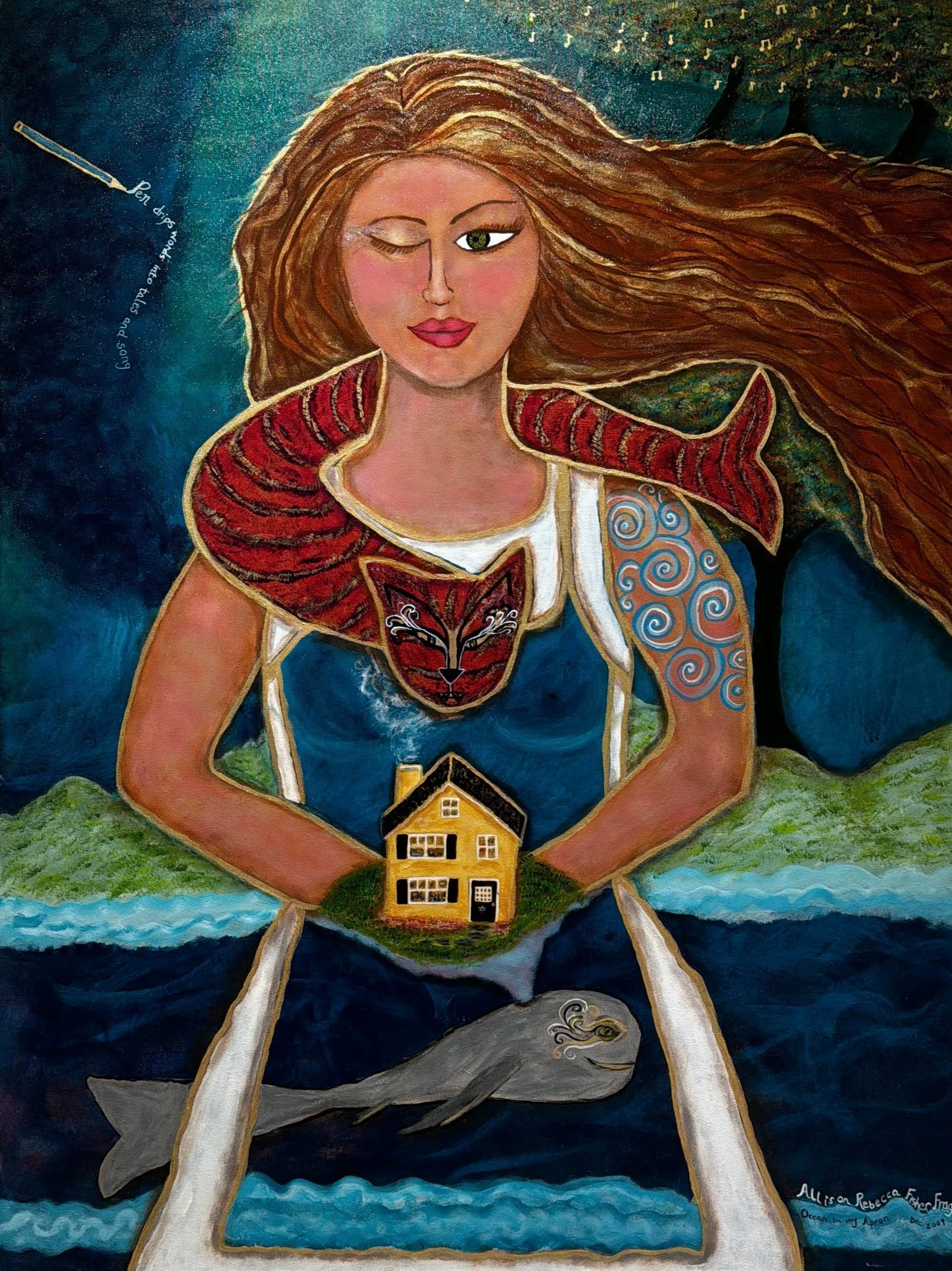
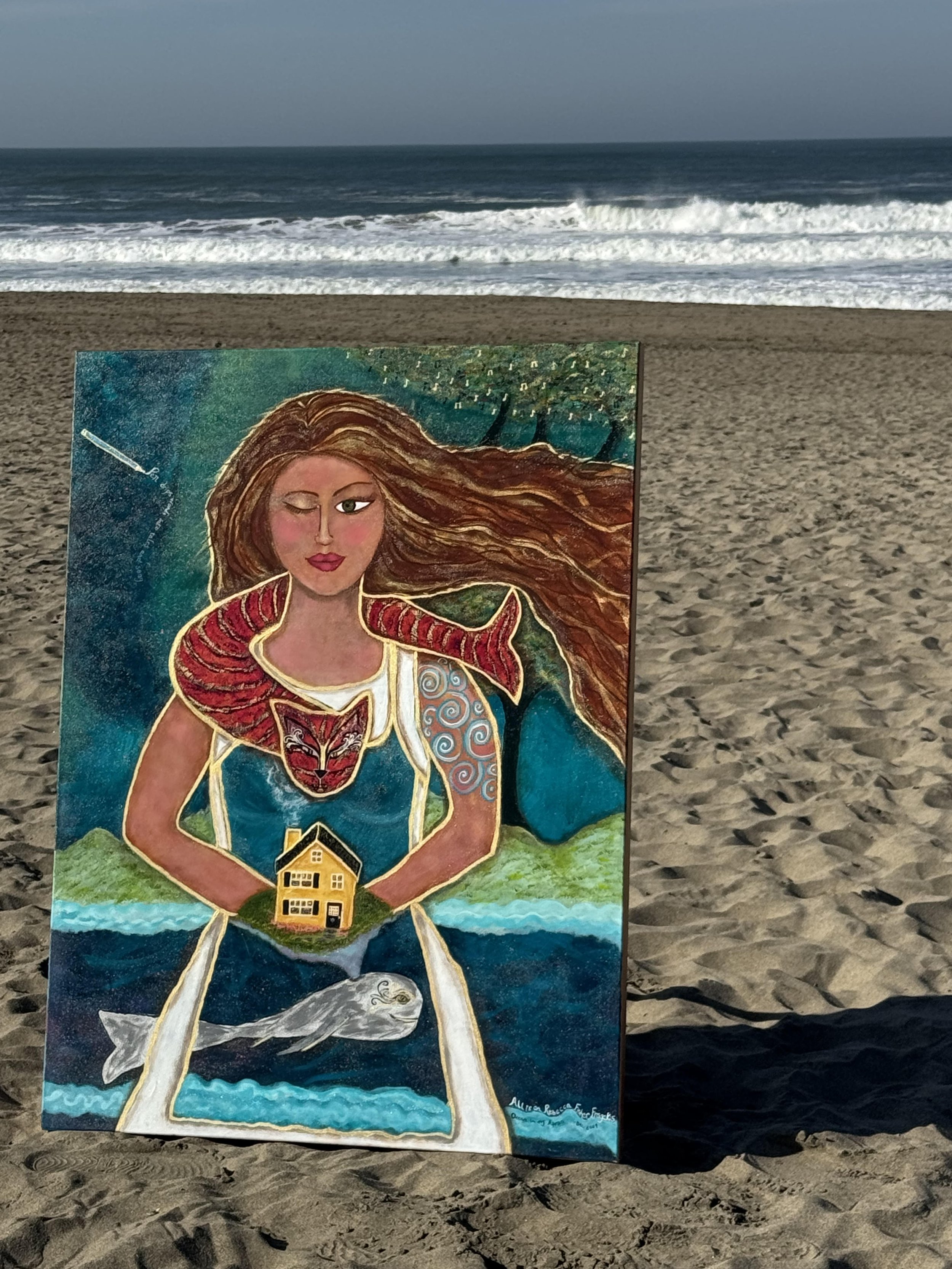
This was the moment I learned the powerful lesson that “mistakes” in art lead us down paths we would have never thought to take. And they can often be better than our original plan. What could I do to get rid of those linebacker shoulders without having to paint over the whole canvas? Without thinking, my hand took over my paint brush and the next thing I knew, those burly shoulders had transformed into a catfish stole wrapped around my legendary self. “Is a catfish stole even a real thing?” I wondered.
When you’re in the altered state of flow, out of the ordinary things can happen. My painting answered me: “It doesn’t matter—you just invented the first-ever catfish stole!” The process of being in playful conversation with my painting continued like this for the remaining months. I’d have an idea of what I wanted to paint on the canvas, but my lack of fine art skills would create something else I hadn’t intended. I learned to let go of wanting it to be a certain way and let the painting be my guide.
By the final session, my legendary self was carrying an entire ocean in her apron. Our instructor gave us our closing journal prompt: “Ask your legendary self to write you a message using the symbols you added into your art.“
My legendary self was very chatty. She also wanted to sing.
Here’s the message she had for me.
But perhaps she has something to say to you too?
Listen to Ocean in My Apron
Listen on Spotify:
Writing prompt for your journal:
Inspired by this experience of stepping into my own painting, I invite you to experience the magic for yourself with the following exercise…
Choose one image, painting, or visual artwork that draws your attention. Spend a few moments studying it. Notice the colors, symbols, textures, figures, and landscape. Then imagine that you can step through the surface of the painting and enter its world. Write from within the image for 15 minutes.
What is the first thing you notice? What sounds, scents, or sensations surround you? Which object, color, animal, or figure calls to you? What message does it have for you? What longing, memory, or truth lives here? Allow the imagery of the painting to guide your language. Rather than explaining, let the poem unfold through images, sensory details, and metaphor.
**This prompt often produces surprisingly rich poetry, even from people who don't consider themselves poets!